Monday, April 29, 2013

Sunday, April 28, 2013
Sunday, April 21, 2013
Blog Assignment #13
Back to the Future
I think the way Brian Crosby helps his students to learn is phenomenal. The most inspiring thing that I heard him say was that students can't "understand what there can be if they don't know what there is". He said this in regards to many of his students, mostly those in poverty, who knew very little about the world around them. He has a fourth grade class, but many of them couldn't identify their phone number, address, city, or state. Mr. Crosby tried to create ways that they could connect with the world around them. My favorite was the balloon experiment. Using their own, and other kids around the world's 'high hopes', they created their own hot air balloon and sent it up in the sky, along with a video camera in the basket. They got to see the whole journey on film and then create their own story as if they were the balloon, and they had to describe their experience. They posted these stories on their blogs and received comments from many other students. This whole assignment allowed them to actually see the process, replay it in their own fashion, and then share it with everyone. Not only does it help them begin networking, but it also gives them a sense of diversity. They get to see where all the kids live that comment on their blogs in comparison to their own surroundings. Mr. Crosby had some great tools to help his class learn what the needed to know in the curriculum, and also about the world around them.
Blended Learning Cycle
Mr. Andersen uses a blended learning strategy called QUIVERS: question, investigate/inquire, video, elaborate, review, and summary quiz. The purpose of a question is to get the students' attention. By awakening their curiosity, he opens the door for investigation. Letting them explore the object(s) that they are questioning gives them a more realistic view. As he showed in the video, he let his students use forceps to move small beads and beans. He used this to show comparison to the beak of a finch. Further explanation is given with a video, in which Mr. Andersen can explain what's going on, while also giving a visual and real life example. Once students have a better idea of what is happening, they can begin to elaborate. An example was given in which he wrote down a list of section numbers and asked them to read and be able to understand certain aspects of the text. Once they get a visual of the process and how it connects to the world, he reviews with them to make sure they know the material well enough to answer probing questions that he has. The last step is a summary quiz. This allows the students to check themselves and go back to do more review if there are any areas that they still have problems with.
I think Mr. Andersen has a good strategy; it's something I'll have to try. I like how he gets the students curiosity and lets them explore the topic before he asks them to read about it in the book. I know for me personally, it is a lot easier to understand text if I already have some idea of what's going on. Sometimes reading text first can be confusing if you don't know how to relate to what you're reading. I also think it's very beneficial that he sits down with them to have review sessions and asks them questions that really test their understanding of the topic. He said that 'if you really learn something, you should be able to teach it' and I completely agree with that. Checking to make sure that his students can explain to him what they know ensures that they actually comprehend what they're saying, and aren't just spitting out answers. It's a solid learning process; I think most students would benefit from it!
Thursday, April 18, 2013
Progress Report on Final Project
Sunday, April 14, 2013
Special Assignment #1
Metaphors are best used to explain emotions that we don't know how to put into words. For instance: time is money. We associate money with having value, meaning that we also consider time to be valuable to us. Sea of grief is another one. Grief is a feeling that can range from very extreme to not at all. We know a sea is a vast expanse of water; that informs us that the level of grief runs deep or is very extensive.
Some of the best works of literature and poetry in the past and present times have been filled with metaphors. "Shall I compare thee to a summer's day" is a famous one written by Shakespeare. He's comparing the pleasantness and elegance of the summer season to his opinion of a special woman. "Art washes away from the soul the dust of everyday life" came from Picasso, one of the greatest artists of the late 19th-20th century. To him, art is as meaningful as being able to brush yourself off and start a new day off right when you have problems. Dr. Strange uses a metaphor all the time when he says we have to get rid of burp back education. He tries to drive home the point that there is no reason to learn things if you are just going to burp it right back up and not even be able to use it. Metaphors are everywhere and you have to know how to understand them if you want to comprehend what's going on in the world around you.

Blog Assignment #12
Many people view Physical Education as nothing more than fun and games. For those of you who plan to be Physical Education instructors, it is your job to make sure that it will be a useful learning experience. Read Dylan Blain's post iPads/iPods in PE – Practical Workflow with Edmodo. What is Edmodo? Share your thoughts on Mr. Blain's post and tell us how you would implement it in your classroom. Even if you don't plan to be a PE teacher, it will benefit you to know how important Physical Education is as a learning process.
iPads/iPods in PE – Practical Workflow with Edmodo
Edmodo is used to connect people with the contacts and resources they need to help them reach their full potential. It helps to personalize learning and uses educational apps to enhance learning in the classroom. According to Mr. Blain, this is beneficial in the PE environment because it allows the students to join groups and participate in assigned tasks. For example, say students are learning how to do a particular skill set, such as shooting a lay-up in basketball. The kids can join whichever group they need to in order to work with people who are on the same level of experience. Even though the skill is a lay-up, some students will need to work on jumping off the correct foot when shooting, while others might need to work on shooting with their non-dominant hand. The grouping and tasks that this app provides allows less experienced students to learn at their own pace, rather than getting left behind by those that may already know how to do most of the aspects of that particular skill.
Another reason that Edmodo is great for Physical Education is because of the mobility that it provides. Using an IPod or IPad, images and film can be recorded in the gym or on the field; wherever the lesson is taking place. There is a separate app called Coach's Eye to do that, but Mr. Blain informs us that Edmodo makes it possible for students to access and assess their footage at any time and even create a portfolio. This is one of the most beneficial ways for students to learn because, using the film, they can see specifically what they are doing wrong and how it should be reformed, rather than hearing a teacher tell them how to correct it without a visual to guide them.
As a Physical Education teacher, I will definitely be using Edmodo. Not only will it give my students access to something that will help them see how to correct their movements, but it also allows them to learn how to monitor progress. I think it will be a great motivation for them to be able to watch the footage and see their progression in small steps, and eventually their achievement of the skill. With the video evidence, they can see just how far they have come with the whole process; and they definitely need that reinforcement that they've done a good job! Edmodo will go a long way in terms of organization, and the resources that it will provide me with to help enhance the learning environment of my students will be a positive movement towards making Physical Education a better and more beneficial experience for the whole class.

Sunday, April 7, 2013
C4T Summary Teacher #3
The next post, Google Chrome in Education, gives us insight to the many benefits of using Google Chrome. You can have as many different user accounts as you want and personalize them to make them accessible to whatever you need. In essence, it puts all of your educational resources right at your fingertips. To me, this is just one more step to make technology user friendly and help it meet the needs of everyone. These tools that Mr. Wickens has brought to light are giving school systems every reason to want to include technology to give students a better educational experience.

C4K Summary March

Rocky's teacher is Ms. King, and he attends Pt. England School in New Zealand. He informs us of why he thinks Easter eggs are a part of Easter. One suggestion he made was that they symbolize new life, and the other was that the hollow egg represents the tomb of Jesus. I told him that those were both great ideas, and that new life made sense, seeing as eggs are the beginning of a new life and coloring them gives them personality like a human would have. I could tell he really thought about the true meaning of the holiday, rather than just assuming it's purpose was for the Easter bunny to make his rounds giving out candy.
Blog Assignment #11
Ms. Cassidy's use of technology gives her students an advantage over most. Having the kids create individual blogs is something that I will definitely make use of in my future classroom. I've always realized that it is an effective way to give them an audience for their work, but I never considered that it enhanced their writing skills. Then again, if you are frequently writing and receiving encouraging feedback, that motivation is almost guaranteed to result in skill improvement. This is one of the most beneficial ways for students to write because it gets the kids excited about what they are doing. Even in the video you could hear how thrilled they were to know that other people read and comment on what they write, and it makes them eager to learn and share more. The students themselves want to be successful and that's the most important thing.
I believe her use of the Smart Board is also an excellent idea. It's a great way to teach them how to use the technology that we have today to their benefit, and to prepare them to reap the full rewards of future learning tools. I say that because not all students will be receptive to it. There are going to be a number of kids who won't want to use something so big or stand in front of their peers to do so. However, I believe that with practice, encouragement, and a little one-on-one time with the Smart Board, they will become more comfortable with it and be able to use it productively. This in itself is valuable, but the best skill that they learn from this is how to embrace the new tools that they are given; not be afraid of them.
I don't know that I would use it in my classroom, but her idea to use the Nintendo DS to let her students play games which teach them skills like how to take care of an animal is ingenious. No, that may not be in the curriculum, but what a great way to get them to learn something that they might not know otherwise! Knowing how to comment on blogs isn't in the curriculum either, but it's a step in the right direction to helping the kids understand the right and wrong way to interact with other people. That's something that they'll have to know in the real world all through life; and shouldn't one of our main goals be to teach them how to be successful in whatever they do?!
Ms. Cassidy is putting her students on the fast track to success, and guiding them along until they can walk the path themselves. More teachers should take her approach.

Monday, April 1, 2013
Blog Assignment #10

The above cartoon was drawn by John T. Spencer. When I first looked at it, I wasn't really sure what it meant. After doing a little searching, I found out that it's comparing Mac and PC computers. Once I was able to make that connection, I understood the point (no pun intended) that Mr. Spencer was trying to communicate. Commercials for both of these two types of computers make it seem as if they are the best option, and the competition has nothing to offer. His description compares a cheap Papermate pencil versus a more expensive Ticonderoga. Essentially, PC's are cheaper but they don't have all of the bells and whistles that a Mac has. It just goes to show you how you can advertise anything to look the way you want it so that it will sell, but in reality you're going to get either an overpriced toy or something that won't last you very long. It's important to know what you're really buying so that you don't get distracted by the pretty ads and forget the purpose of your purchase!
Why Were Your Kids Playing Games?
The principal at Mr. Spencer's school is completely against any type of game. In his mind, "games" can't be used to learn and usually lead to trouble with parents. What Mr. Spencer is trying to explain to him that he can't seem to understand is that his activities are being used to help his students comprehend the material; they're not useless. I find it interesting that the principal talks of "abandoning slate-based learning", but then suggests a system using worksheets and packets, exactly the type of learning that he says he wants to stay away from. No, it's not the same as the teacher standing in front of the class and lecturing, and yes, it does allow the class to work at their own pace and do work individually; but that type of learning is not interactive at all. Mr. Spencer integrates the concepts into his games so that the students are able to learn and apply the information. Unlike the principal, he understands that learning should be more valuable than getting the kids to memorize information for a standardized test. Learning standards are constantly changing anyway!
The Con Academy
The principal at Mr. Spencer's school wants him to talk to a man about the idea of flipping his classroom. Instead of the teacher lecturing for most of the period and having little or no time for application of the subject and individual help, a flipped classroom allows for the students to be able to go over the material beforehand and lets the teacher spend precious class time answering questions that the students have and doing activities to help them apply the concepts that they learn. The system that the man proposed was to let each child learn skills on their own and use a step by step process to master each of those skills independently. It takes away the teaching role. While it does allow students to work at an individual pace, the only thing that they are actually learning to do is follow set of instructions. It won't show them how to interpret a passage from Shakespeare or write a good essay. They need someone instructing them; written guidelines can't explain a concept the way a teacher can. You can read more about it here.
I think Mr. Spencer is trying to make a point that you have to care about your students. Every kid deserves the best education possible, and it's our job as teachers to provide that. We have to be willing to learn along with them and be their guide to success. They eventually do have to know how to learn on their own, but we have to give them the tools to do that first.
Don't Teach Your Kids This Stuff, Please?
Scott McLeod plays a major role in technology advancement issues. He is the Founding Director of the only place that solely works to meet the technology needs of school administrators. In his post, he begs parents, teachers, and schools alike not to view technology as being evil. If it's monitered properly, it can be one of a teacher's greatest tools. Denying them use of these valuable assets isn't going to do anything but deny them a better learning experience. If students can use those tools to share knowledge with the world and spread their ideas and creativity, we shouldn't deny them the privilege. There's no need to assume they're going to abuse the privilege and deny them the experience, we're better off teaching them how to use it to their advantage.
Sunday, March 31, 2013
Thursday, March 28, 2013
Saturday, March 23, 2013
Blog Assignment #9
Mr. McClung's first year of teaching was a period of growth and maturity which proved to be an invaluable experience. He explains that it's important not to get too caught up in your own appearance. As a teacher, making your students successful is your first priority, not impressing the boss and other co-workers. I have to agree with him. If you're too focused on how you look to others, you won't likely realize whether or not your own students are comprehending. You've got to remember who the audience is!
He also expresses the need to be flexible. While it's important to have a lesson plan to follow, things aren't always going to go as planned. It's more beneficial to everyone if you take the time to make sure the whole class understands, rather than rushing to cover the material in a certain amount of time. I think you have to be able to adjust. If you don't take the time to make sure the students are following along, then you're wasting your time anyway. Lesson plans can always be changed.
Communication is another important factor. Mr. McClung believes that it is the best way to solve any problems that may arise. You're going to see your students and fellow teachers almost every day, so it's better to resolve any issues and figure out how to prevent them in the future than it is to avoid it and let tension build up and make the situation worse. I think if you want your co-workers and students to respect you, then you have to be willing to make sure everyone is on the same page. Good communication skills are the only way that will happen.
He informs us that it's crucial to remember who you're dealing with as well. Students are going to make a lot of mistakes, and they won't always reach the bar that you set for them. That doesn't mean that they should be punished; as a teacher it's your job to keep encouraging them and to help them do a better job next time. I have to agree, sometimes you have to let the students set their own bars. He stresses not to lower standards for yourself either. Don't be afraid of something as powerful as technology just because you haven't mastered it yet. In my opinion, you have to look at it as an opportunity for you to learn along with your students. You don't have to know everything!
Mr. McClung has learned first-hand how valuable it is to listen to your students. You're a vital part of their learning experience; just hear them out. You may be the only one willing to help them, and they'll be grateful that you did. Taking an interest in your students is the only way you'll really get to know them and be more equipped to guide them to success. Not only that, but you have to be willing to do the same thing that you're asking of the class: learn. He says if you can't grow as an educator, then students won't be able to reap the full benefits of your teaching. I'd have to say that he's right on target; you can't expect students to rise to a challenge if you can't even do it yourself.
What I Learned This Year - Volume 4
At the end of his fourth year teaching, Mr. McClung explains to us that for most of the year he still worried way too much about what his superiors thought about him. All of that unnecessary added stress did nothing but affect his mood in a negative way, and that in turn was taken out upon his students. He finally realized that it didn't matter one way or the other whether or not his peers approved of his teaching, as long as his students were benefiting from it. If the kids are enjoying the class and come in eager to learn, changing tactics just to impress others is only going to take away from their learning experience. I plan to make sure that my students are always put first. I'll feel better about the end result, and I will have helped them to reach their full potential. Changing even one life for the better will make it worthwhile; that's what teaching is all about!
The bottom line is: if your students aren't enjoying the lessons that you give them, they won't learn. It's easy to fall into a routine and form lazy habits. Mr. McClung was enlightened when he found out that he would get to teach different classes his fourth year. He noticed that he had relied too much on lesson plans from previous years, and also that he hadn't come up with any creative new ideas to keep his students on their toes. While it's easy to teach something that you've become comfortable with, it's even easier to become boring and monotonous without even realizing it. If kids resent going to class because they hate the experience, then you're setting them up to resist knowledge in the future. As teachers, we should want our students to enjoy learning and be ready and willing to share it with others; not be the reason they are afraid of it.

Sunday, March 10, 2013
Friday, March 8, 2013
C4T Summary

In his second post, Steve tells us what a gold mine social media really is. For one, it allows for what he calls "active learning". What he means by this is letting students express what they've learned, whether it be through blogposts, podcasts, or something more advanced; rather than feeding them the information with no chance for them to reproduce the new knowledge. These are effective tools to use because they allow the students to share their work with others and gain valuable connections and feedback. He reminds us that this can only happen if teachers are willing to utilize these tools for what they're really worth, and if school districts will be willing to unblock these resources. I definitely concur with his thoughts. Spreading the knowledge that they have learned gives them a valuable experience that they will be more likely to remember in the long run. Not only that, learning how to share information early is vital to success in future endeavors.
Sunday, March 3, 2013
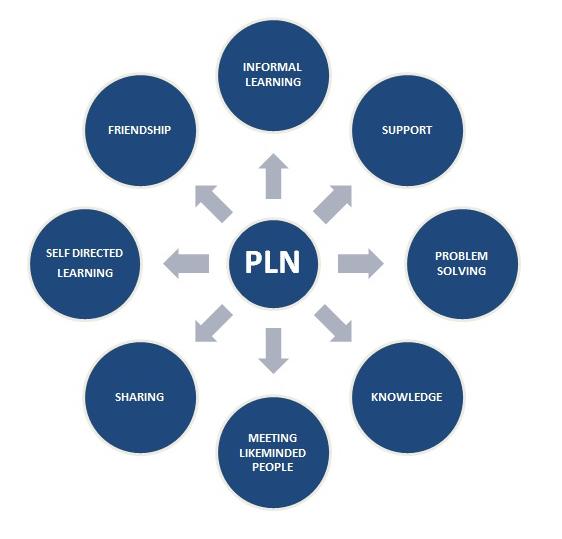
Project 9: PLN Progress Report
C4K Summary
 Thomas told us what he thought YouTube would be like if it existed in 1912. He believes that there would be a lot of propaganda because it was right before the first world war. However, the common people would post goofy videos like we do today, and the working class would be advocating better wages and working conditions. I agreed with him, because YouTube is a great place for advertising. Also, people post about things that they can relate to in their everyday lives, and all the things he mentioned occurred during that time period.
Neal loves hockey, and his favorite team is Pittsburgh. When he plays, he likes to have a snack and power drink on hand. He's pretty good at playing hockey too, he scored 20 goals! I asked him if he scored all of those goals in one game, and what kind of snack he likes to have. I also wondered if he had any other favorite teams, and told him that he would have to show me the ropes; I don't know too much about hockey!
Paikea and Skye are just starting a new school year in Room 6. I told them that I hope they have a good year and learn many new things. I also wish to see more of their blogs soon!
Blog Assignment #7
I have to admit that I was fascinated by Dr. Pausch's lecture. The biggest, or at least what I believe to be the most important thing that I learned from him, is that the only boundaries you have are the ones that you set for yourself. Yes, there are going to be road blocks along the way and people are going to tell you no, or that you can't do it. However, we have to remember that other people aren't the ones guiding our path. If one way doesn't work, there's always a second option. You just have to be willing to find it. Even sometimes when our dreams don't work out exactly the way that we planned them to, such as Dr. Pausch not being able to play in the NFL, the lessons that we learn along the way and can pass on to others are well worth the journey.
As an educator, I know that my job is not to limit my students, but rather to give them all the tools that they need so that they are ready for any challenges that they may face. Dr. Pausch helped me to realize that the language I use is a big factor in their success as well. Saying "I don't know" to a student versus saying "I don't know, tell me more" can make all the difference. Just because I don't know how to do something or how to help them get started doesn't mean I can't encourage them to pursue it and help them to get the connections they need so that they can move in the right direction. When I teach, I plan to encourage all my students and give them helpful advice rather than tell them I can't help and blow it off. Sometimes that little extra push can be the difference in whether they choose to pursue their dreams or not.
Dr. Pausch made some revolutionary changes at Carnegie-Mellon. Not only did he help to make a new program where kids could create amazing projects that were devised completely from their own instruction, but by sharing it with the rest of the school; he allowed fellow students, parents, and teachers alike to get a taste of the amazing things that creativity and imagination can produce. In my classroom, the students will be able to venture down the paths of their mind that they didn't even know they had. I won't set a bar, because letting them do projects where there are no guidelines forces them to think and use their own creative judgement. It's easy to follow a set of instructions and do homework or a project. However, it's not so easy to create something when there are endless ways to complete the task. It's not the end result that's so important, but rather finding the path to get there and knowing how to do that in all aspects of life that makes the ride worthwhile.
